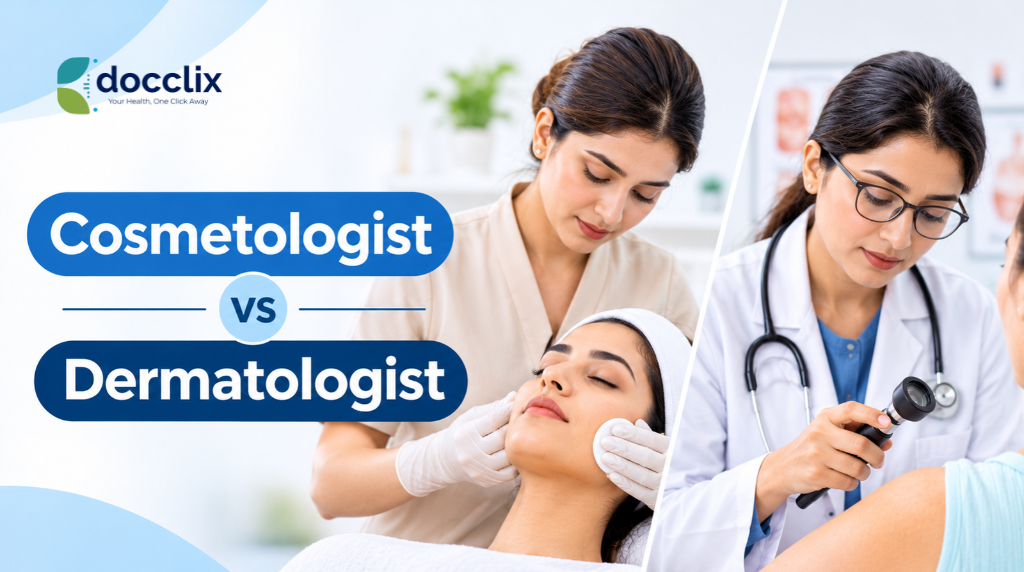
A cosmetologist and a dermatologist both work in the field of skin care and beauty, but their education, qualifications, and responsibilities are different. A cosmetologist generally focuses on beauty treatments and cosmetic skin care, while a dermatologist is a medically qualified doctor who diagnoses and treats skin, hair, and nail conditions.
Understanding the difference can help you choose the right professional for your skin concerns.
What Is a Cosmetologist?
A cosmetologist is a beauty and skin-care professional trained in cosmetic treatments and personal grooming. Depending on their training and qualifications, they may provide services such as facials, basic skin-care treatments, makeup, hair care, and other beauty procedures.
Common services offered by cosmetologists include:
- Facials and basic skin cleansing.
- Makeup application and beauty treatments.
- Hair styling and hair care.
- Basic cosmetic skin-care procedures within their training and permitted scope.
- Advice on cosmetic products and beauty routines.
A cosmetologist is not automatically a medical doctor. They generally cannot independently diagnose medical skin conditions or prescribe medicines.
What Is a Dermatologist?
A dermatologist is a qualified medical doctor who specialises in diagnosing and treating conditions affecting the skin, hair, and nails. Dermatologists complete medical education and specialised postgraduate training in dermatology.
Common conditions treated by dermatologists include:
- Acne and acne scars.
- Eczema and psoriasis.
- Skin infections and allergies.
- Pigmentation and melasma.
- Hair loss and scalp disorders.
- Nail disorders.
- Skin growths and certain skin cancers.
Dermatologists may also provide medically supervised cosmetic procedures, depending on their training and qualifications.
Cosmetologist vs Dermatologist: Key Differences
|
Basis |
Cosmetologist |
Dermatologist |
|
Primary focus |
Beauty and cosmetic care |
Medical skin, hair, and nail health |
|
Education |
Beauty or cosmetology training |
Medical degree and specialised dermatology training |
|
Medical qualification |
Not necessarily a doctor |
Qualified medical doctor |
|
Diagnosis |
Does not independently diagnose medical skin diseases |
Diagnoses skin, hair, and nail conditions |
|
Treatment |
Beauty and cosmetic services within their training |
Medical treatments and qualified cosmetic procedures |
|
Prescription medicines |
Cannot prescribe as a medical doctor |
Can prescribe medicines |
|
Common concerns |
Facials, makeup, grooming, basic beauty care |
Acne, eczema, pigmentation, infections, hair loss |
When Should You Consult a Cosmetologist?
You may consider consulting a trained cosmetologist for non-medical beauty and grooming services, such as:
- Getting a facial or basic skin-cleaning treatment.
- Learning makeup techniques.
- Getting advice on cosmetic products.
- Hair styling and grooming.
- Exploring beauty treatments that fall within their qualifications.
If you have an unexplained rash, persistent acne, skin infection, or another medical concern, consult a dermatologist instead.
When Should You Consult a Dermatologist?
A dermatologist is the appropriate professional when you have a medical concern involving your skin, hair, or nails.
Consider consulting a dermatologist if you experience:
- Persistent acne, painful pimples, or acne scars.
- Dark patches, melasma, or unexplained pigmentation.
- Persistent itching, redness, or skin rashes.
- Sudden or excessive hair loss.
- Fungal or other suspected skin infections.
- Changes in the colour, shape, or size of a mole.
- Skin concerns that do not improve with basic skin care.
A dermatologist can examine your condition, identify its possible cause, and recommend suitable treatment.
Can a Dermatologist Also Be a Cosmetologist?
A dermatologist may also have additional training in cosmetic dermatology. Such professionals can address medical skin concerns as well as offer selected cosmetic procedures, depending on their qualifications and expertise.
However, the terms are not interchangeable. A cosmetologist is not automatically qualified to practise dermatology, and a dermatologist's medical qualification should be verified independently.
Which Is Better: A Cosmetologist or a Dermatologist?
The right choice depends on your concern.
- For beauty and grooming services: A trained cosmetologist may be suitable.
- For acne, pigmentation, rashes, or skin diseases: Consult a dermatologist.
- For medical skin treatments and cosmetic procedures: Choose a qualified dermatologist with relevant procedural training.
If you are unsure whether your concern is cosmetic or medical, starting with a dermatologist is generally the safer option.
Consult a Dermatologist for Skin and Cosmetic Concerns
Have skin concerns or considering a cosmetic treatment? Consult a qualified dermatologist to understand your needs and explore suitable treatment options.
Find experienced dermatologists on DocClix and take a step towards healthier-looking skin.
Consult a Dermatologist for Skin and Cosmetic Concerns
If you are unsure whether your skin concern requires cosmetic care or medical treatment, consulting a qualified dermatologist can help you make the right decision. A dermatologist can diagnose skin conditions, recommend suitable treatments, and guide you on safe cosmetic procedures based on your skin type and concerns.
Dr. Aneesa Sajeed, Dermatologist, offers medical and cosmetic dermatology services, including care for acne, pigmentation, skin allergies, and other skin concerns. Her expertise in both medical and aesthetic skin care can help patients understand their treatment options.
If you are experiencing persistent skin problems or considering a cosmetic skin procedure, consult a qualified dermatologist for personalised guidance.
Consult Dr. Aneesa Sajeed on DocClix for expert guidance on medical and cosmetic skin care.
FAQs
1. Is a cosmetologist a doctor?
Not necessarily. A cosmetologist is generally trained in beauty and cosmetic services. They are not automatically qualified as medical doctors and cannot independently diagnose or prescribe treatment for medical skin conditions.
2. Can a cosmetologist treat acne?
A cosmetologist may offer basic cosmetic skin-care services, but medical acne treatment should be handled by a dermatologist. Persistent or severe acne may require prescription medicines or medical procedures.
3. Who is better for pigmentation, a cosmetologist or a dermatologist?
A dermatologist is the appropriate professional for diagnosing and treating pigmentation. Dark patches may have different causes, and treatment depends on the underlying condition.
4. Can a cosmetologist prescribe skin medicines?
No. A cosmetologist who is not medically qualified cannot prescribe medicines. Consult a qualified doctor for medical treatment.
5. Can a dermatologist perform cosmetic treatments?
Yes. Dermatologists with relevant training may perform cosmetic procedures such as chemical peels, laser treatments, and other skin procedures.
6. Is cosmetic dermatology the same as cosmetology?
No. Cosmetic dermatology is a medical field focused on improving skin appearance through medically supervised treatments. Cosmetology primarily focuses on beauty, grooming, and cosmetic services.
7. Should I visit a dermatologist before getting a facial?
If you have active acne, skin irritation, allergies, infections, or a known skin condition, consult a dermatologist before undergoing a facial or other cosmetic treatment.
For Doctors & Clinics
Get your AI Visibility Page for ₹1,999
One-time setup. Google, ChatGPT & Gemini ready. No monthly commitment to start.
Get Onboarded — ₹1,999 arrow_forward
Medical Sources & Evidence-Based Guidelines
DocClix content is curated from reputable clinical guidelines, peer-reviewed medical publications, and statutory healthcare bodies including the World Health Organization (WHO), National Medical Commission (NMC), and Indian Council of Medical Research (ICMR).
- National Health Mission (NHM) Clinical Protocols and Standard Treatment Guidelines.
- Indian Council of Medical Research (ICMR) Evidence-Based Disease Management.
- PubMed / National Library of Medicine (NLM) Peer-Reviewed Studies.