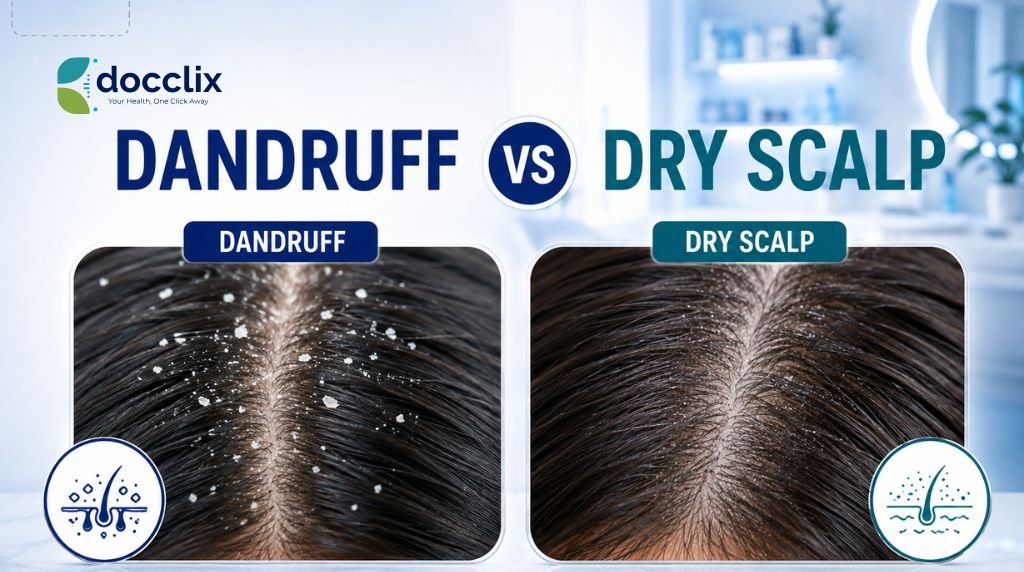
Flakes on the scalp can be frustrating, embarrassing, and sometimes difficult to understand. Many people assume that every flaky scalp is caused by dandruff, but this is not always true. Dandruff vs dry scalp is a common confusion because both conditions can cause visible flakes, itching, and scalp discomfort.
However, the underlying causes are different, which means the treatment approach may also be different. Dandruff is often linked to excess oil, scalp irritation, and the overgrowth of a naturally occurring yeast, while a dry scalp usually develops when the skin lacks sufficient moisture. Understanding the difference can help you choose the right scalp care routine and know when professional advice is needed.
This guide explains the important differences between dandruff and dry scalp, including their causes, symptoms, appearance, treatment options, and prevention tips.
What is Dandruff?
Dandruff is a common scalp condition that causes the skin cells on the scalp to shed more rapidly than normal. This leads to visible flakes that may appear on the hair, shoulders, clothing, or scalp. It can also cause itching, irritation, and in some cases redness or inflammation.
Unlike a simple dry scalp, dandruff is often associated with increased oil production and sensitivity to a yeast called Malassezia, which naturally lives on the skin. The flakes caused by dandruff are often larger, more noticeable, and may have a white or yellowish appearance.
-
What Causes Dandruff?
Several factors can contribute to the development of dandruff. One of the main factors is the interaction between scalp oil and Malassezia yeast. In some people, the scalp becomes irritated by the breakdown of oils, which can increase skin cell turnover and lead to flaking.
Other factors such as oily skin, sensitivity to hair care products, stress, hormonal changes, and certain skin conditions may also contribute. Dandruff is not necessarily caused by poor hygiene, although infrequent shampooing may allow flakes and oil to become more noticeable.
-
Symptoms of Dandruff
The most common symptom of dandruff is visible flaking of the scalp. These flakes may be white, off-white, or yellowish and can sometimes stick to the scalp or hair strands. People with dandruff may also experience itching, irritation, or mild redness.
Symptoms can become more noticeable during colder months, periods of stress, or when oily hair products build up on the scalp. In some cases, dandruff may be part of a more persistent scalp condition such as seborrheic dermatitis.
What is a Dry Scalp?
A dry scalp occurs when the skin on the scalp does not have enough moisture. Just as the skin on the hands or face can become dry and flaky, the scalp can also lose moisture and develop small flakes. This condition is often associated with dryness rather than excess oil.
People with a dry scalp may notice tightness, itching, and fine white flakes. The problem may become worse during cold weather, in dry environments, or when using harsh shampoos and hair products that remove too much of the scalp's natural moisture.
-
What Causes a Dry Scalp?
A dry scalp can develop for several reasons. Frequent washing with strong shampoos, prolonged exposure to hot water, dry weather, and excessive use of heat styling tools can remove natural oils from the scalp. This can weaken the skin barrier and make the scalp feel dry and irritated.
Certain hair products containing strong fragrances, alcohol, or harsh cleansing agents may also contribute to dryness. In some cases, skin conditions such as eczema or psoriasis can cause scalp flaking and may require medical evaluation.
-
Symptoms of a Dry Scalp
Dry scalp flakes are usually smaller and finer than dandruff flakes. They are often white and may easily fall away when the hair or scalp is touched. The scalp may also feel tight, dry, or itchy, especially after washing.
Some people may notice dry skin in other areas of the body as well, such as the face, hands, or elbows. Unlike dandruff, a dry scalp is generally not associated with excessive oiliness or thick, greasy-looking flakes.
Dandruff vs Dry Scalp: Key Differences
Although dandruff and dry scalp can both cause flaking and itching, there are several important differences between them. Looking at the appearance of the flakes, the condition of the scalp, and other symptoms can help you understand which problem may be affecting you.
The right identification is important because moisturizing treatments may help a dry scalp, while dandruff often responds better to medicated or anti-dandruff shampoos.
-
Colour of the Flakes
Dandruff flakes can appear white, off-white, or yellowish. They may look slightly oily or greasy because dandruff is often associated with excess sebum on the scalp. In some cases, the flakes can form thicker patches.
Dry scalp flakes are usually small, fine, and white. They often resemble dry skin flakes and may fall away easily onto clothing or bedding.
-
Size and Texture of the Flakes
Dandruff flakes are often larger and may have a thicker or slightly greasy texture. They can stick to the scalp or hair because of the presence of excess oil and skin buildup.
Dry scalp flakes are usually smaller, lighter, and powdery. They tend to fall off more easily and may be accompanied by an overall feeling of dryness or tightness.
-
Oiliness of the Scalp
An oily scalp is more commonly associated with dandruff. The scalp may feel greasy soon after washing, and flakes can mix with sebum and form visible patches.
A dry scalp usually feels less oily and may feel rough or tight. The hair and scalp may also appear dry, particularly when moisture-stripping products are used regularly.
-
Location of the Flaking
Dandruff is usually concentrated on the scalp, but it can also affect areas with oil-producing glands, such as the eyebrows, sides of the nose, ears, and beard area. This can sometimes suggest seborrheic dermatitis.
Dry skin may not be limited to the scalp. People with a dry scalp may also notice dryness or flaking on other parts of the body, depending on the underlying cause.
-
Scalp Appearance
With dandruff, the scalp may appear oily, irritated, or mildly red. Some people may develop thicker scales or patches, especially if the condition is persistent.
A dry scalp may appear dry and flaky without significant oiliness. However, persistent redness, thick scaling, or painful areas should be evaluated by a dermatologist because another scalp condition may be present.
You may also like:Best Dermatologists in Bangalore: Expert Skin Care When You Need I
Dandruff vs Dry Scalp: A Quick Checklist
If you are unsure whether you have dandruff or a dry scalp, paying attention to your symptoms can provide useful clues. While this checklist cannot replace a medical diagnosis, it can help you understand which condition your symptoms resemble more closely.
If the problem continues despite changing your hair care routine, consulting a dermatologist can help identify the exact cause.
-
The Flake Check
Large, yellowish, or slightly greasy flakes are more commonly associated with dandruff. These flakes may stick to the scalp or hair and can become noticeable when oil and dead skin cells build up.
Small, dry, powdery flakes are more likely to be associated with a dry scalp. These may fall easily from the hair and are often accompanied by tightness or dryness.
-
The Scalp Feel Check
If your scalp feels oily, greasy, or itchy soon after washing, dandruff may be more likely. Excess oil can create an environment that contributes to dandruff-related flaking.
If your scalp feels tight, rough, or uncomfortable after washing, dryness may be the main problem. Hot water and harsh shampoos can make this sensation worse.
-
The Product Response Check
If switching to a gentle, moisturizing shampoo improves your symptoms, dryness may be playing an important role. Reducing frequent washing and avoiding harsh products may also help restore the scalp barrier.
If moisturizing products do not improve the flakes but an anti-dandruff shampoo helps, dandruff may be the more likely cause. Results can vary, so persistent symptoms should be assessed by a professional.
How to Treat Dandruff?
Dandruff treatment focuses on reducing excess flakes, controlling scalp irritation, and managing the factors that contribute to increased skin cell turnover. Mild dandruff may improve with regular use of an appropriate anti-dandruff shampoo.
The best treatment depends on the severity of symptoms and how the scalp responds to different products.
-
Use an Anti-Dandruff Shampoo
Anti-dandruff shampoos may contain active ingredients such as ketoconazole, zinc pyrithione, selenium sulfide, salicylic acid, or other ingredients designed to reduce flakes and control scalp buildup. Different ingredients work in different ways, so one product may be more effective for one person than another.
Follow the instructions on the product carefully, including how long the shampoo should remain on the scalp before rinsing. If symptoms persist or become severe, a dermatologist may recommend a stronger treatment.
-
Wash the Scalp Regularly
Regular cleansing helps remove excess oil, dead skin cells, and product buildup from the scalp. However, washing too aggressively or using harsh products can increase irritation.
Choose a routine that suits your hair type and scalp condition. People with persistent dandruff may benefit from alternating a medicated shampoo with a gentle regular shampoo.
-
Avoid Scratching the Scalp
Scratching can damage the skin barrier and increase irritation. It may also lead to small wounds that increase the risk of secondary infection.
If itching is severe or persistent, it is better to identify and treat the underlying cause rather than repeatedly scratching the scalp.
How to Treat a Dry Scalp?
Treatment for a dry scalp focuses on restoring moisture and reducing irritation. Simple changes to your hair care routine can often improve mild dryness, especially when the problem is related to harsh products or environmental factors.
Using gentle products and protecting the scalp barrier can help reduce flaking over time.
-
Choose a Gentle Shampoo
Use a mild shampoo that does not excessively strip natural oils from the scalp. Products designed for sensitive or dry skin may be helpful for some individuals.
Avoid shampoos with strong fragrances or harsh cleansing ingredients if you notice that they make your scalp feel tight or irritated.
-
Avoid Very Hot Water
Hot water can remove natural oils from both the scalp and hair. Washing with lukewarm water can help cleanse the hair while reducing moisture loss.
Keeping showers reasonably short may also help prevent excessive dryness.
-
Use Scalp-Friendly Moisturizing Products
Some people benefit from scalp moisturizers or gentle products formulated to support the skin barrier. However, heavy oils may not be suitable for everyone, particularly if dandruff or seborrheic dermatitis is the actual cause of the flakes.
If you are unsure which products are appropriate, a dermatologist can recommend options based on your scalp type and symptoms.
You may also like:Top 3 Dermatologists in Bangalore for Expert Skin Care
Habits That May Make Scalp Flaking Worse
Certain daily habits can worsen either dandruff or dry scalp. Identifying these triggers can help reduce recurring flakes and improve the overall health of your scalp.
A consistent and gentle hair care routine is often more effective than frequently switching between multiple products.
-
Overwashing the Hair
Washing the hair too frequently with strong shampoos can strip the scalp of natural oils and contribute to dryness. On the other hand, washing too infrequently may allow oil and dead skin cells to accumulate.
Finding a balanced washing routine based on your scalp type is important.
-
Using Too Many Hair Products
Excessive use of styling products, sprays, gels, and dry shampoos can lead to product buildup. This buildup may make flakes more visible and irritate the scalp.
Regular cleansing and choosing lightweight products can help reduce unnecessary buildup.
-
Excessive Heat Styling
Frequent use of hair dryers, straighteners, and other heated tools may contribute to dryness and irritation. Using lower heat settings and avoiding unnecessary heat exposure can help protect the scalp and hair.
Allowing the hair to air dry when possible may also reduce heat-related dryness.
When Should You See a Dermatologist?
Mild dandruff or dry scalp can often improve with appropriate hair care and over-the-counter products. However, persistent or severe symptoms may indicate an underlying skin condition that requires professional diagnosis and treatment.
Seeing a dermatologist can help distinguish between dandruff, dry scalp, seborrheic dermatitis, psoriasis, eczema, fungal infections, or other scalp conditions.
-
Persistent or Severe Flaking
If flakes continue for several weeks despite appropriate treatment, it may be time to seek professional advice. Persistent symptoms can indicate that the condition is not simple dandruff or dryness.
A dermatologist can examine the scalp and recommend targeted treatment based on the cause.
-
Severe Itching or Redness
Intense itching, burning, swelling, or visible redness should not be ignored. These symptoms may suggest significant inflammation or another dermatological condition.
Early treatment can help reduce discomfort and prevent further irritation caused by repeated scratching.
-
Thick Scales or Skin Patches
Thick, firmly attached scales or sharply defined patches may occur with conditions such as psoriasis or severe seborrheic dermatitis. These conditions may require prescription treatment.
A proper diagnosis is important because the treatment for these conditions can differ from standard dandruff care.
-
Hair Loss Along With Scalp Symptoms
If flaking is accompanied by noticeable hair loss, bald patches, broken hairs, pain, or scalp tenderness, consult a dermatologist promptly. These symptoms may indicate an underlying condition that requires medical attention.
Early evaluation can help identify the cause and provide appropriate treatment.
How DocClix Helps You Find the Right Dermatologist
Understanding the difference between dandruff vs dry scalp can help you choose a better hair care routine, but persistent symptoms may require professional evaluation. A dermatologist can examine your scalp, identify the underlying cause of flaking, and recommend treatment based on your specific skin and hair condition.
With DocClix, you can find dermatologists based on location, specialty, experience, and available consultation options. This makes it easier to compare doctor profiles and choose a healthcare professional who can help with dandruff, dry scalp, hair loss, scalp infections, psoriasis, eczema, and other skin concerns.
DocClix also makes it convenient to book appointments and, where available, consult doctors through video or chat. You can keep your prescriptions, consultation details, and health records organized in one place, helping you manage your healthcare journey more effectively.
If scalp flakes continue despite home care or over-the-counter products, connecting with a qualified dermatologist through DocClix can help you receive a proper diagnosis and personalized treatment plan.
🧴 Get Expert Care for Dandruff and Scalp Problems
Persistent flakes, itching, redness, or scalp irritation may not always be caused by simple dryness. A qualified dermatologist can identify the underlying cause and recommend the right treatment for dandruff, dry scalp, seborrheic dermatitis, psoriasis, or other scalp concerns.
Conclusion
The main difference between dandruff vs dry scalp lies in the underlying cause. Dandruff is often associated with excess oil, scalp irritation, and changes related to Malassezia yeast, while a dry scalp usually develops because the skin lacks adequate moisture. Although both conditions can cause flakes and itching, the appearance of the flakes and the condition of the scalp can provide useful clues.
Using the right approach is important. Anti-dandruff treatments may help manage dandruff, while gentle cleansing and moisture-supporting scalp care may be more suitable for dryness. If symptoms are persistent, severe, or accompanied by redness, thick scales, or hair loss, consult a dermatologist for an accurate diagnosis.
Through DocClix, you can find qualified dermatologists, book an appointment, and get professional guidance for ongoing scalp and skin concerns.
FAQs
Q1. Can dandruff and dry scalp happen at the same time?
Yes. It is possible for the scalp to experience both dryness and dandruff-related flaking. Using too many harsh products while also having an oily or dandruff-prone scalp can make the condition more complicated. A dermatologist can help identify the dominant cause and recommend a suitable routine.
Q2. Why do I get more scalp flakes in winter?
Cold weather and dry indoor air can reduce moisture in the skin and worsen dry scalp. At the same time, changes in washing habits, scalp oil production, and skin sensitivity may also make dandruff more noticeable during certain seasons.
Q3. Can hair oil make dandruff worse?
For some people, heavy oils may increase scalp buildup and make dandruff-related flakes more noticeable. The effect can vary depending on the individual and the underlying scalp condition. If oiling consistently worsens your symptoms, it may be better to discuss suitable scalp care with a dermatologist.
Q4. Can hard water cause a dry or flaky scalp?
Hard water may leave mineral deposits on the hair and scalp, and some people find that it contributes to dryness, rough hair, or irritation. However, persistent flaking may have other causes, so ongoing symptoms should not automatically be blamed on water quality alone.
Q5. Should I change my shampoo if dandruff keeps coming back?
Changing shampoos may help, particularly if your current product is causing irritation or if an anti-dandruff ingredient is not effective for you. Dandruff can recur, so a maintenance routine may sometimes be necessary. If multiple products have not helped, consult a dermatologist through DocClix for personalized advice.
For Doctors & Clinics
Get your AI Visibility Page for ₹1,999
One-time setup. Google, ChatGPT & Gemini ready. No monthly commitment to start.
Get Onboarded — ₹1,999 arrow_forward