Introduction
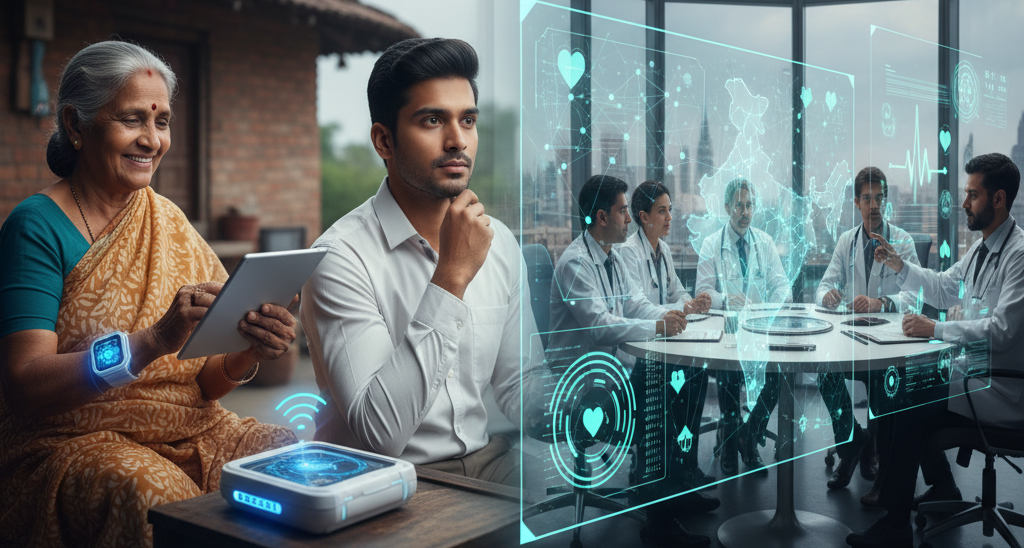
The Indian healthcare sector is undergoing a rapid transformation. From overcrowded hospitals to long waiting times, traditional healthcare delivery has faced numerous challenges. But with the integration of AI in healthcare, telemedicine services, and remote diagnostics, access to quality care is being redefined.
Today, patients can book a video consultation with doctor, share reports digitally, and even receive predictive insights about their health — all without leaving their homes. These technological shifts are bridging the urban-rural divide, improving efficiency, and making healthcare more affordable.
In this blog, we’ll explore the emerging trends in Indian healthcare, how they’re reshaping patient experiences, and what it means for the future of medicine.
Today, patients can book a video consultation with doctor, share reports digitally, and even receive predictive insights about their health — all without leaving their homes. These technological shifts are bridging the urban-rural divide, improving efficiency, and making healthcare more affordable.
In this blog, we’ll explore the emerging trends in Indian healthcare, how they’re reshaping patient experiences, and what it means for the future of medicine.
AI in Healthcare: Revolutionizing Patient Care
a. Predictive Analytics and Early Diagnosis
AI is helping doctors analyze patient data to predict diseases at an early stage. AI-powered tools can detect cancer from radiology scans or predict diabetes risks years before symptoms appear.
AI chatbots and voice assistants are handling common patient queries, booking appointments, and providing basic online medical advice.
Example: A patient experiencing flu-like symptoms can use an AI-driven assistant to receive initial guidance before booking an appointment.
c. Drug Discovery and Research
AI accelerates drug development by analyzing vast datasets, reducing time and costs for research.
AI is helping doctors analyze patient data to predict diseases at an early stage. AI-powered tools can detect cancer from radiology scans or predict diabetes risks years before symptoms appear.
- Improves diagnosis accuracy.
- Saves time by automating interpretation of complex data.
- Enables personalized treatment plans.
AI chatbots and voice assistants are handling common patient queries, booking appointments, and providing basic online medical advice.
Example: A patient experiencing flu-like symptoms can use an AI-driven assistant to receive initial guidance before booking an appointment.
c. Drug Discovery and Research
AI accelerates drug development by analyzing vast datasets, reducing time and costs for research.
The Rise of Telemedicine in India
a. Growth Post-Pandemic
The pandemic made telemedicine mainstream. Today, patients often prefer virtual consultations for non-emergency issues.
The National Digital Health Mission (NDHM) is enabling digital health records, health IDs, and verified online medical platforms.
c. Telemedicine Use Cases
The pandemic made telemedicine mainstream. Today, patients often prefer virtual consultations for non-emergency issues.
- Eliminates travel and waiting time.
- Provides access to specialists anywhere in India.
- More affordable and convenient than traditional visits.
The National Digital Health Mission (NDHM) is enabling digital health records, health IDs, and verified online medical platforms.
c. Telemedicine Use Cases
- Dermatology
- Mental Health Therapy
- Chronic Disease Management
- Pediatric Consultations
Remote Diagnostics: Bridging the Urban-Rural Divide
a. What is Remote Diagnostics?
It uses digital tools and connected devices to monitor and analyze patient health from a distance — crucial in remote or underserved regions.
b. Real Examples
It uses digital tools and connected devices to monitor and analyze patient health from a distance — crucial in remote or underserved regions.
b. Real Examples
- Portable ECGs transmitting data to cardiologists in real-time.
- Remote blood sugar monitors for diabetes care.
- AI-assisted radiology scans reviewed by metro-based specialists.
- Early detection of critical conditions.
- Continuous monitoring of chronic diseases.
- Reduce need for frequent hospital visits.
- Cost-effective and accessible care.
Integration of AI + Telemedicine + Remote Diagnostics
The combined impact lies in seamless data sharing and care coordination.
Example Workflow:
Example Workflow:
- A patient tracks heart rate using a wearable device.
- AI flags irregular readings and suggests possible concerns.
- The patient books a teleconsultation with a cardiologist.
- The doctor reviews AI insights and prescribes treatment instantly.
Challenges in Adopting Emerging Healthcare Trends
- Digital Literacy: Many rural or elderly patients are unfamiliar with online systems.
- Infrastructure Gaps: Internet access and power supply are inconsistent in many areas.
- Data Privacy Concerns: Digital health data must be protected from misuse.
- Trust Barriers: Patients often prefer in-person consultations due to familiarity.
The Future of Indian Healthcare
By 2030:
- Telemedicine will be the default for primary care.
- Hospitals will rely on remote diagnostics to reduce in-person queues.
- AI will enable predictive medicine and early detection.
- Quality care will reach rural populations without physical travel.
Case Study: Patient in Bangalore
Priya, a 36-year-old working mother, experienced irregular heartbeats. Instead of visiting a hospital, she used a wearable ECG device which sent data to a cardiologist via telemedicine. The doctor reviewed it instantly and prescribed treatment.
Key Takeaway: Integration of AI, remote diagnostics, and telemedicine enables faster care with greater convenience.
Key Takeaway: Integration of AI, remote diagnostics, and telemedicine enables faster care with greater convenience.
🚀 Experience the Future of Healthcare with Docclix
Don’t wait for tomorrow — explore online health consultation, AI-powered insights, and reliable remote diagnostics today. With Docclix, your health is just a click away.
Available 24/7
Serving Across India
Conclusion
The future of healthcare in India is being shaped by AI in healthcare, telemedicine services, and remote diagnostics. Together, they are making medical care more accessible, affordable, and patient-friendly.
At Docclix, we embrace these innovations to connect patients with top doctors, ensure secure virtual consultation, and empower people with smarter healthcare solutions.
At Docclix, we embrace these innovations to connect patients with top doctors, ensure secure virtual consultation, and empower people with smarter healthcare solutions.
FAQ
- How is AI transforming healthcare in India?
AI is improving diagnosis accuracy, enabling early disease detection, and helping doctors create personalized treatment plans. It also supports drug discovery and automates hospital workflows. - What are the main benefits of telemedicine for Indian patients?
Telemedicine makes healthcare more accessible, especially in rural areas. Patients can save time, money, and still receive high-quality advice. - Are online doctor consultations safe and reliable?
Yes, platforms like Docclix are secure and verify all doctors. E-prescriptions and reports are legally valid, ensuring safety. - What is remote diagnostics, and how does it help rural India?
Remote diagnostics use digital tools to monitor health from afar, ensuring timely care for remote patients. - How do AI, telemedicine, and remote diagnostics work together?
They create a connected healthcare chain — AI analyzes health data, telemedicine delivers care, and remote diagnostics monitor progress.
For Doctors & Clinics
Get your AI Visibility Page for ₹1,999
One-time setup. Google, ChatGPT & Gemini ready. No monthly commitment to start.
Get Onboarded — ₹1,999 arrow_forward