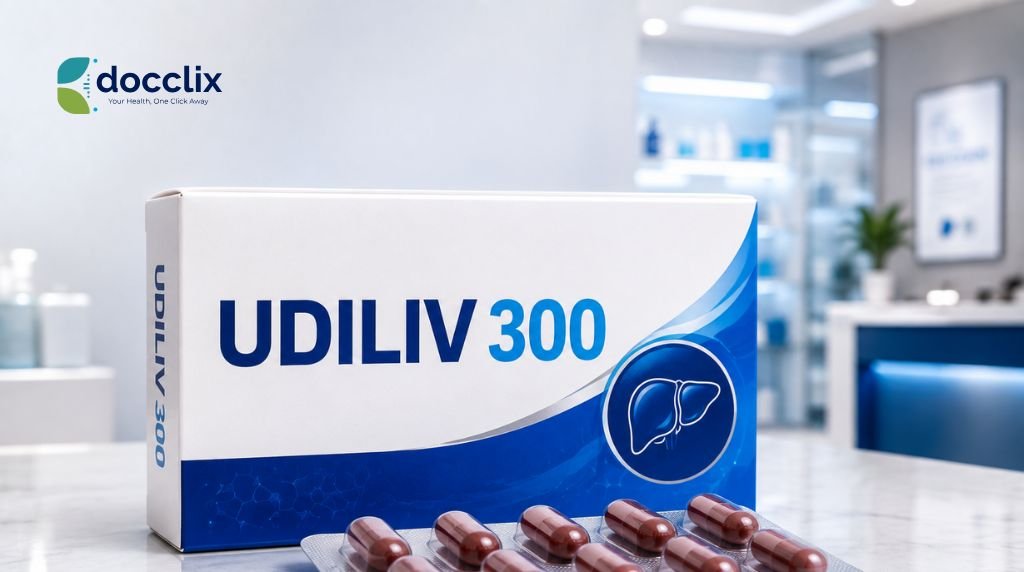
Udiliv 300 is a prescription medicine containing ursodeoxycholic acid (UDCA) 300 mg, a naturally occurring bile acid used for certain liver and gallbladder conditions. It is commonly prescribed for conditions involving impaired bile flow and for selected cholesterol-containing gallstones.
The medicine works mainly by changing the composition of bile, improving bile flow, and reducing the harmful effects of certain bile acids on liver cells. However, the appropriate dose and duration depend on the condition being treated, so it should be taken only according to medical advice.
Although generally well tolerated, Udiliv 300 can cause side effects such as diarrhoea, abdominal discomfort, nausea, indigestion, itching, rash, and headache in some people.
This guide explains its uses, how it works, dosage considerations, possible side effects, precautions, interactions, and when you should contact a doctor.
What Is Udiliv 300?
Udiliv 300 is a tablet containing ursodeoxycholic acid 300 mg. It belongs to a group of medicines known as bile acids and is used under medical supervision for selected liver and gallbladder disorders.
The medicine can help improve bile movement and reduce the concentration of cholesterol in bile. This makes it useful in certain patients with cholesterol gallstones and some chronic liver conditions associated with impaired bile flow.
It is not a general liver tonic or a medicine that should be taken simply because liver enzymes are elevated. The underlying cause of the liver problem should be evaluated by a healthcare professional before treatment is started.
Uses of Udiliv 300
The uses of Udiliv 300 depend on the patient's diagnosis and overall health. Doctors may prescribe ursodeoxycholic acid for certain gallbladder and liver conditions where improving bile flow or changing bile composition can be beneficial.
-
Treatment of Certain Cholesterol Gallstones
Udiliv 300 may be prescribed to dissolve selected cholesterol-rich gallstones. It works by reducing cholesterol saturation in bile, which can gradually help dissolve suitable stones.
However, not every gallstone can be treated with ursodeoxycholic acid. The size, composition, location of the stone, gallbladder function, and the patient's overall condition all influence whether this treatment is appropriate.
-
Primary Biliary Cholangitis
Ursodeoxycholic acid is used in the management of primary biliary cholangitis, a chronic liver disease affecting the small bile ducts. Improving bile flow and reducing the harmful effects of bile acids can help support liver function.
Patients taking the medicine for a chronic liver condition may require regular medical follow-up and liver-function monitoring.
-
Certain Bile Flow Disorders
Udiliv 300 may also be prescribed for selected disorders involving reduced or abnormal bile flow. The exact indication depends on the patient's diagnosis and clinical circumstances.
Because liver and bile duct disorders can have many causes, self-treatment is not recommended.
-
Certain Liver and Biliary Conditions Associated With Cystic Fibrosis
Ursodeoxycholic acid may be used in some patients with cystic-fibrosis-associated liver or biliary disease. The medicine may help improve bile flow and reduce bile-related injury.
Its use in children and adolescents should be determined by a specialist according to the patient's age, weight, diagnosis, and clinical needs.
You may also like:Top 3 Gastroenterologists in Bangalore for Digestive Health Care
How Does Udiliv 300 Work?
The active ingredient in Udiliv 300 is ursodeoxycholic acid. It changes the composition of bile and reduces the proportion of potentially harmful bile acids.
It can also reduce cholesterol saturation in bile, which is one reason it may be used for suitable cholesterol gallstones. In certain liver diseases, improving bile flow and reducing toxic bile acid effects can help protect liver cells.
The medicine does not provide an instant effect. Depending on the condition, treatment may need to continue for several months or longer, and regular follow-up may be necessary.
Udiliv 300 Dosage
The correct dose of Udiliv 300 depends on the condition being treated, body weight, liver function, and other individual factors. Therefore, there is no single dosage that is appropriate for everyone.
Your doctor will determine how much you should take and how frequently you should take it. Do not increase, reduce, or stop the medicine on your own.
-
How Should Udiliv 300 Be Taken?
Udiliv 300 is generally taken with or after food, according to the prescribing doctor's instructions. The tablet should be swallowed whole with water and should not be crushed or chewed unless your healthcare professional specifically advises otherwise.
Taking the medicine consistently at the recommended time can make it easier to follow the treatment schedule. If you miss a dose, follow the instructions provided by your doctor or pharmacist rather than taking extra tablets to compensate.
-
How Long Should You Take Udiliv 300?
The duration varies considerably depending on the medical condition. Some people may need treatment for several months, while chronic liver conditions may require longer-term therapy.
Even if you begin feeling better, do not discontinue the medicine without discussing it with your doctor. Stopping treatment prematurely may affect the management of the underlying condition.
Side Effects of Udiliv 300
Like any medicine, Udiliv 300 can cause side effects, although not everyone experiences them. Many reported effects are mild and may improve as the body adjusts to the medicine.
Commonly reported effects include diarrhoea, abdominal pain or discomfort, nausea, indigestion, itching, rash, headache, flatulence, fatigue, back pain, and hair loss.
1. Diarrhoea
Diarrhoea is one of the more commonly reported side effects of ursodeoxycholic acid. It may be mild and temporary, but persistent diarrhoea can cause dehydration.
Drink adequate fluids and contact your doctor if the problem is severe, continues for an extended period, or is accompanied by weakness or other concerning symptoms.
2. Nausea
Some people may experience nausea after taking Udiliv 300. Taking the medicine with food as prescribed may help reduce stomach-related discomfort.
If nausea is persistent, severe, or accompanied by repeated vomiting, speak with your healthcare provider rather than stopping the medicine yourself.
3. Abdominal Pain or Discomfort
Abdominal discomfort or pain may occur during treatment. However, abdominal pain can also be a symptom of gallstones or another underlying condition.
Severe, sudden, or worsening abdominal pain should not automatically be assumed to be a medication side effect. It should be medically evaluated.
4. Indigestion and Flatulence
Some patients may experience indigestion, bloating, or increased gas. These symptoms are generally mild but can be uncomfortable.
Maintaining a balanced diet and following your doctor's dietary recommendations may help. Persistent digestive symptoms should be discussed during follow-up.
5. Headache
Headache has been reported in patients taking ursodeoxycholic acid. A mild headache may resolve on its own, but recurrent or severe headaches should be discussed with a healthcare professional.
Avoid taking additional medicines for persistent headaches without checking whether they are suitable for you.
6. Itching
Itching can occur during treatment. However, itching can also be a symptom of the underlying liver or bile-flow disorder for which the medicine was prescribed.
If itching becomes severe or is accompanied by a rash, swelling, or breathing difficulty, seek medical advice promptly.
7. Rash
A skin rash may occur in some people taking Udiliv 300. Mild rashes should be reported if they persist or worsen.
A rapidly spreading rash, facial swelling, difficulty breathing, or other signs of a serious allergic reaction require urgent medical attention.
8. Fatigue
Fatigue or weakness has been reported in some patients. However, tiredness may also be associated with the underlying liver condition, so the cause cannot always be attributed to the medicine.
Persistent or worsening fatigue should be discussed with your doctor, particularly if accompanied by other new symptoms.
9. Back Pain
Back pain has been reported among possible side effects of ursodeoxycholic acid. However, back pain can have many unrelated causes.
If the pain is severe, persistent, or associated with abdominal pain, fever, vomiting, or other symptoms, seek medical evaluation instead of assuming it is caused by the medicine.
10. Hair Loss
Hair loss has also been reported in some patients taking Udiliv 300. However, hair shedding can have numerous causes, including nutritional deficiencies, hormonal changes, stress, illness, and other medications.
If you notice significant or persistent hair loss, discuss it with your doctor to identify the likely cause.
You may also like: Dr. Parvesh Kumar Jain - Best Gastroenterologist in Bangalore
Who Should Avoid or Use Udiliv 300 With Caution?
Udiliv 300 is not suitable for everyone. Before starting treatment, tell your doctor about your complete medical history, including liver, gallbladder, and bile duct problems.
People with certain types of gallbladder or bile duct inflammation, obstruction, or other complications may require a different treatment approach.
Your doctor should also know about all medicines, supplements, and herbal products you are taking because some can affect the absorption or effectiveness of ursodeoxycholic acid.
Udiliv 300 During Pregnancy and Breastfeeding
If you are pregnant, planning pregnancy, or breastfeeding, speak with your doctor before taking Udiliv 300. The decision to use the medicine depends on the underlying condition and the expected benefits and risks.
Do not start or stop prescription medication during pregnancy without professional medical advice.
Drug Interactions With Udiliv 300
Some medicines can affect how ursodeoxycholic acid works or how well it is absorbed. For example, certain aluminium-containing antacids may interfere with its absorption, so the timing of these medicines may need to be adjusted.
Tell your doctor or pharmacist about all prescription medicines, over-the-counter products, vitamins, and supplements you use. Do not assume that a medicine is safe to combine with Udiliv 300 simply because it is available without a prescription.
Can Udiliv 300 Be Taken With Food?
Udiliv 300 is generally recommended with or after food according to the prescribing instructions. Taking it with food may also help reduce stomach discomfort for some patients.
Try to take the medicine consistently according to your prescribed schedule. If you have specific dietary restrictions or digestive problems, ask your doctor whether any changes are needed.
What Happens If You Miss a Dose?
If you forget to take a dose, follow the missed-dose instructions provided by your doctor or pharmacist. In general, if you remember relatively soon, you may take the missed dose unless it is almost time for your next scheduled dose.
Do not take two doses together to make up for a missed tablet unless your healthcare professional specifically tells you to do so.
Udiliv 300 Overdose
Taking more Udiliv 300 than prescribed is not recommended. An excessive dose may increase the likelihood of gastrointestinal symptoms, particularly diarrhoea.
If you believe you have taken substantially more than your prescribed dose, contact a healthcare professional or seek appropriate medical assistance. Do not wait for severe symptoms to develop.
Udiliv 300 Price and Availability
The price of Udiliv 300 can vary depending on the pharmacy, pack size, location, taxes, and discounts. Current listings show that a 15-tablet strip may be priced differently across online pharmacies, so patients should check the current price before purchasing.
Udiliv 300 is a prescription medicine, so it should be used only under appropriate medical supervision.
Important Precautions While Taking Udiliv 300
Take the medicine exactly as prescribed and do not change the dose without consulting your doctor. Regular follow-up may be important, particularly when the medicine is being used for a chronic liver or biliary condition.
Tell your doctor if you develop persistent diarrhoea, severe abdominal pain, significant skin reactions, or other unusual symptoms. Also inform your healthcare provider about other medicines you are taking.
Avoid using Udiliv 300 simply as a general "liver cleanser" or without a confirmed medical indication. Its benefits depend on the specific condition being treated.
How DocClix Can Help You Find a Gastroenterologist?
Liver and gallbladder conditions often require proper diagnosis, laboratory testing, imaging, and specialist follow-up. If you have been prescribed Udiliv 300 or are experiencing symptoms related to the liver, gallbladder, or bile ducts, speaking with a qualified gastroenterologist can help you understand the appropriate treatment.
With DocClix, you can find doctors based on specialty and location, review doctor profiles, and book appointments online. Depending on availability, patients can also connect with doctors through video or chat consultations.
DocClix can help simplify your healthcare journey by bringing doctor discovery, appointment booking, digital prescriptions, and health record management together in one platform.
🩺 Get Expert Guidance for Liver and Gallbladder Problems
If you have been prescribed Udiliv 300 or are experiencing symptoms related to your liver, gallbladder, or bile ducts, a qualified gastroenterologist can help identify the underlying cause and guide you toward appropriate treatment.
Conclusion
Udiliv 300 contains ursodeoxycholic acid 300 mg and is prescribed for selected gallbladder and liver conditions, including certain cholesterol gallstones and chronic disorders involving bile flow. It works by changing bile composition, improving bile flow, and reducing the harmful effects of certain bile acids on liver cells.
Although the medicine is generally well tolerated, side effects such as diarrhoea, abdominal discomfort, nausea, indigestion, itching, rash, headache, fatigue, back pain, and hair loss can occur. Persistent or severe symptoms should be discussed with a doctor.
The appropriate dose and treatment duration depend on your individual condition. Therefore, Udiliv 300 should not be started, stopped, or adjusted without medical advice. If you need help understanding your liver or gallbladder condition, consult a qualified specialist through DocClix.
FAQs
Q1. What is Udiliv 300 used for?
Udiliv 300 contains ursodeoxycholic acid and is used for selected liver and gallbladder conditions, including certain cholesterol gallstones and primary biliary cholangitis. The exact indication depends on the patient's diagnosis and should be determined by a doctor.
Q2. Can I take Udiliv 300 every day?
It may be prescribed for regular daily use, but the exact schedule depends on the condition being treated. Take it only according to your doctor's instructions and do not change the dose yourself.
Q3. Does Udiliv 300 cause diarrhoea?
Yes. Diarrhoea is one of the commonly reported side effects of ursodeoxycholic acid. If diarrhoea is severe, persistent, or causes signs of dehydration, contact your healthcare provider.
Q4. Can Udiliv 300 dissolve all types of gallstones?
No. Ursodeoxycholic acid is mainly useful for selected cholesterol-containing gallstones. The type, size, location, and characteristics of the stones determine whether medical dissolution is appropriate.
Q5. Can I stop Udiliv 300 when my symptoms improve?
Do not stop the medicine simply because you feel better. The underlying condition may still require treatment, and stopping early could interfere with the intended therapeutic effect. Discuss any decision to stop or change the medicine with your doctor.
For Doctors & Clinics
Get your AI Visibility Page for ₹1,999
One-time setup. Google, ChatGPT & Gemini ready. No monthly commitment to start.
Get Onboarded — ₹1,999 arrow_forward
Medical Sources & Evidence-Based Guidelines
DocClix content is curated from reputable clinical guidelines, peer-reviewed medical publications, and statutory healthcare bodies including the World Health Organization (WHO), National Medical Commission (NMC), and Indian Council of Medical Research (ICMR).
- National Health Mission (NHM) Clinical Protocols and Standard Treatment Guidelines.
- Indian Council of Medical Research (ICMR) Evidence-Based Disease Management.
- PubMed / National Library of Medicine (NLM) Peer-Reviewed Studies.