Ketones are substances produced by the body when it breaks down fat for energy instead of glucose. While small amounts of ketones may occur normally during fasting, low-carbohydrate diets, or prolonged exercise, high ketone levels can sometimes indicate serious medical conditions such as uncontrolled diabetes. This is why many people search for a urine ketone levels chart to understand what their ketone test results mean.
Urine ketone testing is commonly used to monitor diabetes, detect diabetic ketoacidosis (DKA), or evaluate metabolic changes in the body. Understanding ketone ranges, symptoms, causes, and treatment options helps patients identify warning signs early and seek appropriate medical care when necessary.
What are Ketones?
Ketones are an important source of energy that the body produces when glucose is not readily available. While small amounts of ketones are a normal part of metabolism, elevated ketone levels can indicate that the body is breaking down fat too rapidly. Understanding what ketones are and why they form helps in identifying potential health conditions, especially in people with diabetes.
Ketones are chemicals produced by the liver when the body uses fat as its primary energy source. This usually happens when there is not enough glucose available for energy production.
Why the Body Produces Ketones
The body is designed to use glucose as its primary fuel, but it can switch to burning fat when carbohydrate stores are low. This natural metabolic adaptation helps provide energy during fasting, prolonged exercise, or low-carbohydrate diets. However, excessive ketone production due to insulin deficiency can become dangerous if left untreated.
The body switches to fat metabolism during fasting, carbohydrate restriction, prolonged exercise, or insulin deficiency. This process generates ketones as an alternative fuel source.
When Ketone Testing Is Needed
Ketone testing is an important diagnostic tool that helps monitor the body's metabolic state. It is particularly useful for individuals with diabetes or those at risk of developing Diabetic Ketoacidosis (DKA). Early testing allows healthcare providers to detect abnormal ketone levels and begin treatment before serious complications develop.
Doctors may recommend urine ketone testing for people with diabetes, especially type 1 diabetes, during illness, pregnancy, or uncontrolled blood sugar levels. Testing helps detect dangerous metabolic imbalances early.
Urine Ketone Levels Chart
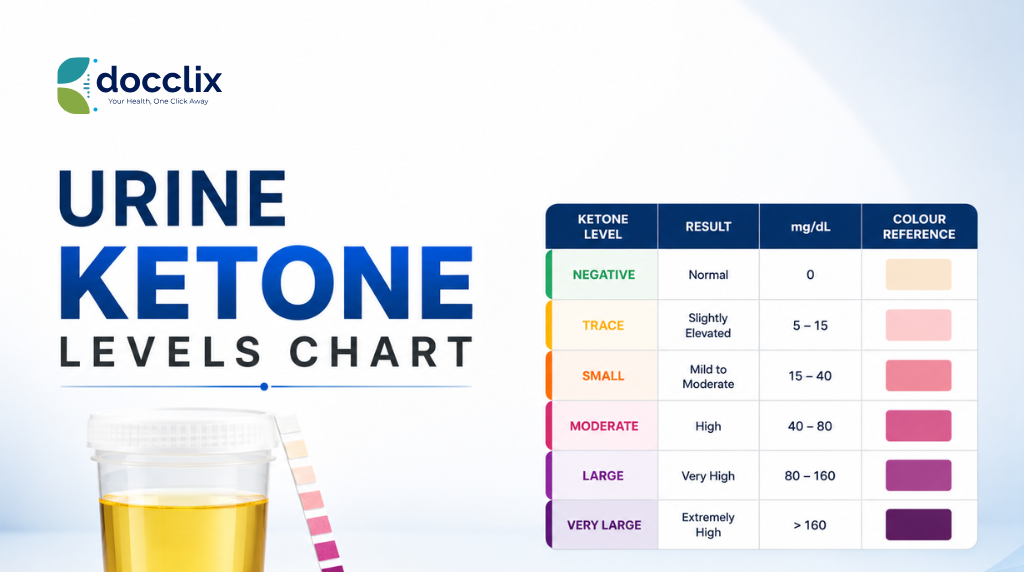
A urine ketone levels chart is a useful reference for understanding whether ketone levels are within a normal range or require medical attention. Ketone test results are typically reported as negative, trace, small, moderate, or large based on the concentration of ketones detected in the urine. Knowing how to interpret these values can help identify potential metabolic issues early, particularly for people with diabetes or those at risk of ketoacidosis.
The urine ketone levels chart helps interpret ketone test results based on concentration levels found in the urine. Results may vary slightly depending on the testing method and laboratory standards.
|
Urine Ketone Level |
Result Meaning |
Typical Interpretation |
|
Negative |
No ketones detected |
Normal |
|
Trace |
Small amount present |
Usually mild or temporary |
|
Small (+) |
Low ketone level |
Monitor hydration and glucose |
|
Moderate (++) |
Elevated ketones |
Medical attention may be needed |
|
Large (+++) |
High ketone level |
Risk of ketoacidosis |
|
Very Large (++++) |
Severe ketone elevation |
Medical emergency possible |
Normal Ketone Levels in Urine
Normal ketone levels in urine indicate that the body is primarily using glucose for energy rather than breaking down fat excessively. In most healthy individuals, urine ketones are either absent or present only in very small amounts. Understanding what is considered normal can help distinguish harmless temporary changes from ketone levels that may require medical evaluation.
In healthy individuals, urine ketones are generally negative or present only in trace amounts. Mild ketone production may occur naturally during fasting or low-carb diets. Persistent or high ketone levels should not be ignored, especially in diabetic patients.
-
Negative Ketone Result
A negative ketone result indicates that no measurable ketones are present in the urine, which is the expected finding for most people. This suggests that the body has sufficient glucose available for energy and is not relying heavily on fat metabolism. It is generally considered a healthy and normal test result.
A negative result means ketones are absent or extremely low in the urine. This is considered normal for most individuals.
-
Trace Ketones
Trace ketones represent a very small amount of ketones in the urine and are often a normal response to temporary changes in the body's metabolism. They can occur after prolonged fasting, strenuous exercise, or following a low-carbohydrate diet. In the absence of symptoms or uncontrolled diabetes, trace ketones are usually not a cause for concern.
Trace ketones may occur after exercise, fasting, or overnight sleep. These levels are usually not dangerous if temporary.
4 Major Causes of High Ketone Levels
High ketone levels develop when the body begins breaking down fat for energy faster than normal, often because glucose cannot be used effectively. While some causes are temporary and harmless, others can signal serious medical conditions that require prompt treatment. Identifying the underlying cause helps determine whether lifestyle changes or immediate medical care is needed.
High ketone levels can occur due to several medical and lifestyle-related factors. Understanding the cause is important for proper treatment. Certain situations require urgent medical attention.
-
Uncontrolled Diabetes
Uncontrolled diabetes is the leading cause of dangerously high ketone levels, particularly in people with type 1 diabetes. When insulin levels are insufficient, glucose cannot enter the body's cells, forcing the body to rely on fat for energy. This rapid fat breakdown produces excess ketones, increasing the risk of diabetic ketoacidosis (DKA).
High ketones are most commonly associated with diabetes, especially type 1 diabetes. Insufficient insulin prevents glucose from entering cells, forcing the body to burn fat rapidly.
-
Fasting and Low-Carbohydrate Diets
Fasting and low-carbohydrate diets can naturally increase ketone production as the body switches from using glucose to burning stored fat for energy. This metabolic state is expected during prolonged fasting or a ketogenic diet and is usually temporary in healthy individuals. However, people with diabetes should monitor ketone levels carefully.
Ketone levels may rise during fasting or ketogenic diets because the body uses fat as its main energy source. This is usually controlled and temporary in healthy individuals.
-
Illness and Infection
During illness or infection, the body's energy demands increase, which can trigger higher ketone production, especially if food intake is reduced. People with diabetes are more vulnerable because infections can also raise blood glucose levels and increase insulin requirements. Regular ketone testing during sickness is often recommended.
Fever, vomiting, or severe illness may increase ketone production, particularly in diabetic patients. Monitoring becomes important during sickness.
-
Pregnancy
Pregnancy can sometimes lead to elevated ketone levels, particularly if morning sickness, vomiting, or poor nutritional intake limits carbohydrate consumption. Although mild ketone levels may be temporary, persistent or high ketone levels during pregnancy should be evaluated by a healthcare provider to protect both the mother and the baby.
Pregnant women may occasionally develop ketones due to nausea, vomiting, or inadequate nutrition. Medical evaluation may be needed in some cases.
Symptoms of High Ketone Levels
High ketone levels can produce a range of symptoms, from mild discomfort to life-threatening complications, depending on the underlying cause and severity. Early recognition of these warning signs is essential, especially for people with diabetes, as prompt treatment can help prevent serious conditions such as diabetic ketoacidosis (DKA). If symptoms worsen or occur alongside high blood sugar, immediate medical evaluation is recommended.
Symptoms vary depending on the severity of ketone elevation and underlying cause. Mild ketone increases may not cause noticeable symptoms initially. Severe ketone elevation can become dangerous if untreated.
-
Excessive Thirst and Frequent Urination
Excessive thirst and frequent urination are among the earliest signs of elevated ketone levels, particularly when accompanied by high blood glucose. As the body attempts to remove excess sugar and ketones through urine, dehydration can develop quickly. Drinking fluids is important, but persistent symptoms require medical attention.
High ketones often occur alongside high blood sugar, causing dehydration and increased urination. Patients may also feel unusually thirsty.
-
Fatigue and Weakness
Fatigue and weakness occur because the body's cells cannot efficiently use glucose for energy, forcing reliance on fat metabolism. This reduced energy availability can leave individuals feeling unusually tired, weak, or unable to perform routine activities. These symptoms are commonly seen in diabetic ketoacidosis.
The body may struggle to produce enough energy efficiently, leading to tiredness and weakness. This symptom is common in diabetic ketoacidosis.
-
Nausea and Vomiting
As ketone levels continue to rise, digestive symptoms such as nausea, vomiting, and abdominal discomfort may develop. These symptoms can worsen dehydration and make it difficult to maintain adequate fluid intake. Persistent nausea or vomiting with high ketone levels should be evaluated promptly by a healthcare professional.
Moderate to severe ketone elevation may cause digestive symptoms such as nausea, vomiting, or abdominal pain. Medical attention may be necessary.
-
Fruity Breath Odor
A fruity or acetone-like smell on the breath is a characteristic sign of elevated ketone levels. This odor results from the release of acetone, one of the ketone bodies produced during fat metabolism. It is a warning sign that should never be ignored, particularly in individuals with diabetes.
A fruity or acetone-like breath smell is a classic sign of elevated ketones. This symptom should not be ignored.
What Is Diabetic Ketoacidosis (DKA)?
Diabetic ketoacidosis (DKA) is a life-threatening medical emergency that occurs when the body produces dangerously high levels of ketones due to a lack of insulin. As ketones accumulate, the blood becomes acidic, disrupting normal body functions. Early diagnosis and immediate treatment are essential to prevent serious complications, including coma or death.
Diabetic ketoacidosis is a serious complication caused by very high ketone levels and uncontrolled blood sugar. It occurs mainly in people with type 1 diabetes but can also occur in some type 2 diabetes cases. DKA requires emergency medical treatment.
Why DKA Happens?
DKA develops when the body is unable to use glucose as its primary source of energy because there is not enough insulin available. To compensate, the body rapidly breaks down fat, producing large amounts of ketones. As these ketones build up in the bloodstream, they cause the blood to become acidic, resulting in diabetic ketoacidosis.
Without enough insulin, the body cannot use glucose properly and rapidly breaks down fat for energy. This leads to excessive ketone production and blood acidity.
Signs of Diabetic Ketoacidosis
The symptoms of diabetic ketoacidosis usually develop quickly and can become severe within hours if left untreated. Recognizing these warning signs early is critical, especially for individuals with diabetes, as prompt medical intervention can prevent life-threatening complications.
Symptoms include severe thirst, vomiting, abdominal pain, confusion, rapid breathing, and dehydration. Immediate hospital care is essential.
How Urine Ketone Testing Is Performed?
Urine ketone tests are simple and commonly performed using ketone test strips. These strips change color depending on ketone concentration.
Results are usually available within minutes.
Using Ketone Test Strips
The strip is dipped into a urine sample and compared with a color chart provided in the kit.
The color indicates ketone concentration.
When to Test Ketones
Doctors may advise ketone testing during high blood sugar episodes, illness, fasting, pregnancy, or symptoms of ketoacidosis.
Regular monitoring helps prevent complications.
You may also like: How to Prepare for an Online Health Consultation?
How to Reduce High Ketone Levels?
Urine ketone testing is a quick, non-invasive method used to detect ketones in the urine and assess the body's metabolic state. It is commonly recommended for people with diabetes, those following ketogenic diets, or individuals experiencing symptoms of elevated ketone levels. The test is easy to perform at home or in a healthcare setting, with results typically available within a few minutes.
Urine ketone tests are simple and commonly performed using ketone test strips. These strips change color depending on ketone concentration. Results are usually available within minutes.
Using Ketone Test Strips
Ketone test strips provide a convenient way to measure urine ketone levels without specialized equipment. After dipping the strip into a fresh urine sample, the resulting color change is compared with the chart included in the test kit. This comparison indicates whether ketone levels are negative, trace, or elevated.
The strip is dipped into a urine sample and compared with a color chart provided in the kit. The color indicates ketone concentration.
When to Test Ketones?
Ketone testing is recommended whenever there is an increased risk of excessive ketone production or diabetic ketoacidosis. Regular testing helps detect abnormal ketone levels early, allowing timely treatment and reducing the risk of serious complications. Your healthcare provider may recommend testing based on your medical condition and symptoms.
Doctors may advise ketone testing during high blood sugar episodes, illness, fasting, pregnancy, or symptoms of ketoacidosis. Regular monitoring helps prevent complications.
Who Is at Higher Risk of High Ketone Levels?
Certain individuals are more prone to developing high ketone levels due to underlying health conditions, lifestyle choices, or periods of metabolic stress. Identifying high-risk groups is important for early monitoring and prevention of serious complications such as diabetic ketoacidosis. Regular awareness and timely testing can significantly reduce health risks in vulnerable individuals.
Certain individuals are more likely to develop elevated ketones due to medical conditions or metabolic stress. Awareness helps improve early detection and prevention.
-
People with Type 1 Diabetes
People with type 1 diabetes are at the highest risk of developing dangerously high ketone levels because their bodies produce little or no insulin. Without adequate insulin, glucose cannot enter cells, leading to rapid fat breakdown and ketone buildup. Regular blood glucose and ketone monitoring is essential for preventing diabetic ketoacidosis.
Insulin deficiency significantly increases the risk of diabetic ketoacidosis. Regular monitoring is essential.
-
Individuals Following Ketogenic Diets
Individuals following ketogenic or very low-carbohydrate diets may naturally experience elevated ketone levels as their bodies shift to fat metabolism for energy. In most cases, this is a controlled and intentional process. However, improper diet management or underlying health conditions may require medical supervision.
Low-carbohydrate diets intentionally increase ketone production, although levels are usually controlled. Medical supervision may help in some cases.
-
Pregnant Women with Severe Nausea
Pregnant women experiencing severe nausea and vomiting may develop higher ketone levels due to reduced food intake and dehydration. This condition can affect both maternal and fetal health if not managed properly. Persistent symptoms should be evaluated by a healthcare provider to ensure proper nutrition and safety.
Persistent vomiting during pregnancy may increase ketone levels due to inadequate calorie intake. Medical advice should be sought if symptoms persist.
How DocClix Helps Patients Manage Diabetes and Health Monitoring?
Managing diabetes and monitoring ketone levels can be challenging, especially during illness, sudden blood sugar changes, or emergencies. Digital healthcare platforms like DocClix make it easier for patients to access timely medical guidance without delays. It helps users connect with verified endocrinologists, general physicians, and diabetes specialists so they can receive proper diagnosis, treatment advice, and ongoing support based on their health condition.
DocClix also offers convenient online consultation through video and chat, making follow-ups and urgent advice more accessible from home. In addition, patients can securely store and manage their health records, including reports, prescriptions, and glucose monitoring data, in one place. This integrated approach supports better diabetes management and long-term health tracking.
Conclusion
Understanding the urine ketone levels chart is important for identifying normal and abnormal ketone ranges, especially for individuals with diabetes or metabolic conditions. While trace ketones may occur naturally in certain situations, moderate or high ketone levels can indicate serious health risks requiring prompt medical attention.
Regular monitoring, proper hydration, blood sugar control, and timely consultation help prevent complications such as diabetic ketoacidosis. Platforms like DocClix further simplify healthcare access by helping patients connect with trusted specialists and manage their health records conveniently.
FAQs
Q1. What is a normal urine ketone level?
A normal urine ketone result is usually negative or trace, meaning little to no ketones are present in the urine.
Q2. What does moderate ketones in urine mean?
Moderate ketones may indicate increased fat breakdown and can occur in uncontrolled diabetes, fasting, illness, or dehydration. Medical advice may be necessary.
Q3. When should high ketone levels become a concern?
Large or very large ketone levels, especially with symptoms like vomiting, breathing difficulty, or high blood sugar, may indicate diabetic ketoacidosis and require emergency care.
Q4. Can dehydration increase ketone levels?
Yes, dehydration can contribute to elevated ketone levels because the body becomes stressed and less efficient at using glucose for energy.
Q5. How often should diabetic patients test ketones?
Doctors may recommend ketone testing during illness, high blood sugar episodes, or symptoms of diabetic ketoacidosis to monitor health safely.
For Doctors & Clinics
Get your AI Visibility Page for ₹1,999
One-time setup. Google, ChatGPT & Gemini ready. No monthly commitment to start.
Get Onboarded — ₹1,999 arrow_forward